
Early-80s steel sectional
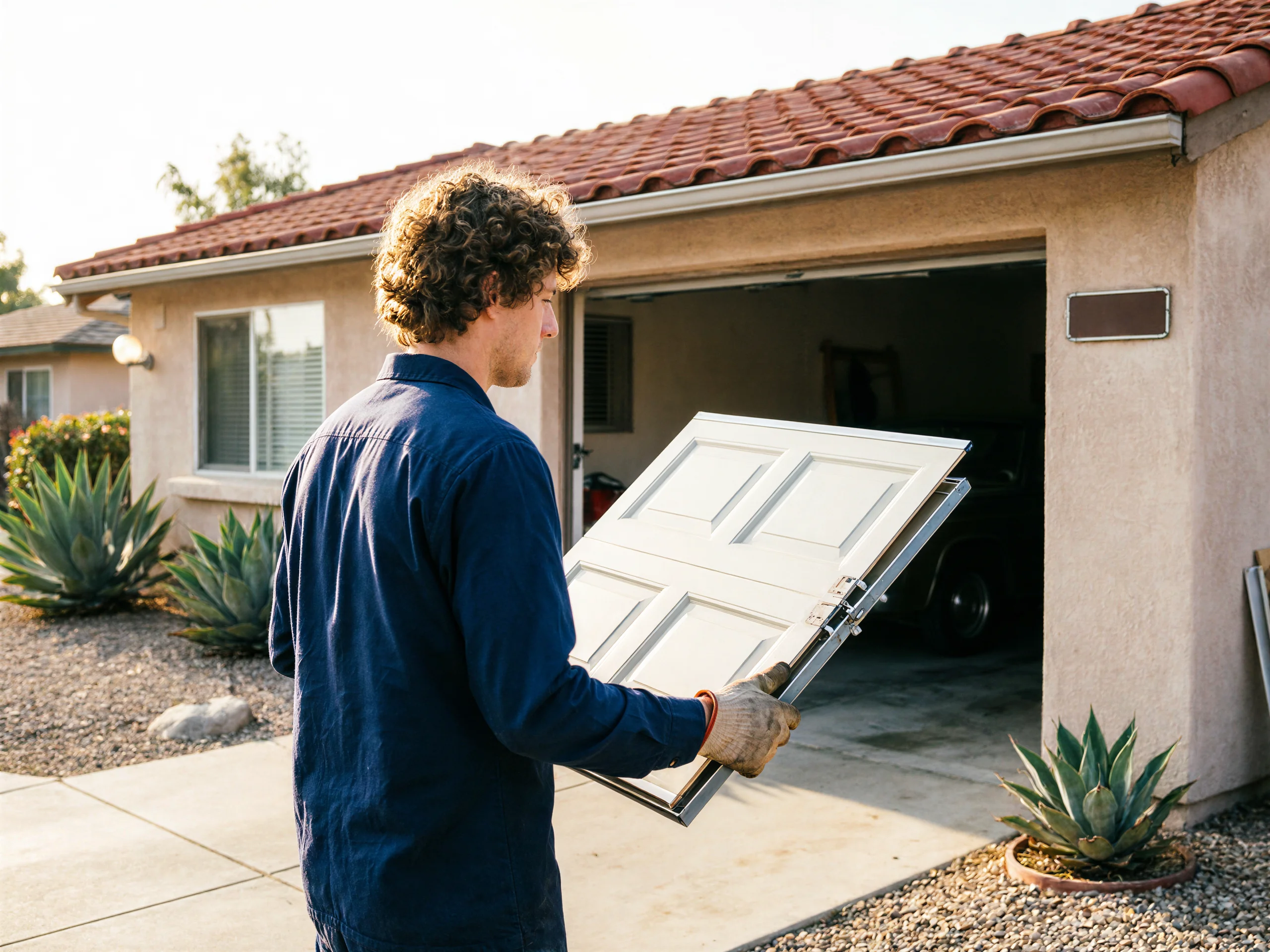
That matters for the DIY question because it tells you what's actually behind that dented panel: a steel sectional door on torsion-spring hardware from the early 80s, not a newer composite door with different fasteners.
 Oceanside, CA
Valley Center, Oceanside
Panel replacement for Valley Center homes built around 1983, 17 miles from our Oceanside shop. We match steel panel sections or tell you honestly when a full door beats a patch.
DIY or pro
Valley Center's housing stock dates to around 1983 on average, which lines up almost exactly with the 1982 median for the whole area we cover out of Oceanside.
That matters for the DIY question because it tells you what's actually behind that dented panel: a steel sectional door on torsion-spring hardware from the early 80s, not a newer composite door with different fasteners.
Swapping one section yourself is possible if you can find the right panel profile and the hinge pattern matches. The catch at 17 miles out is that a wrong-sized panel means another full round trip before you're fixed, and most home centers don't stock the raised-panel steel sections that era used.
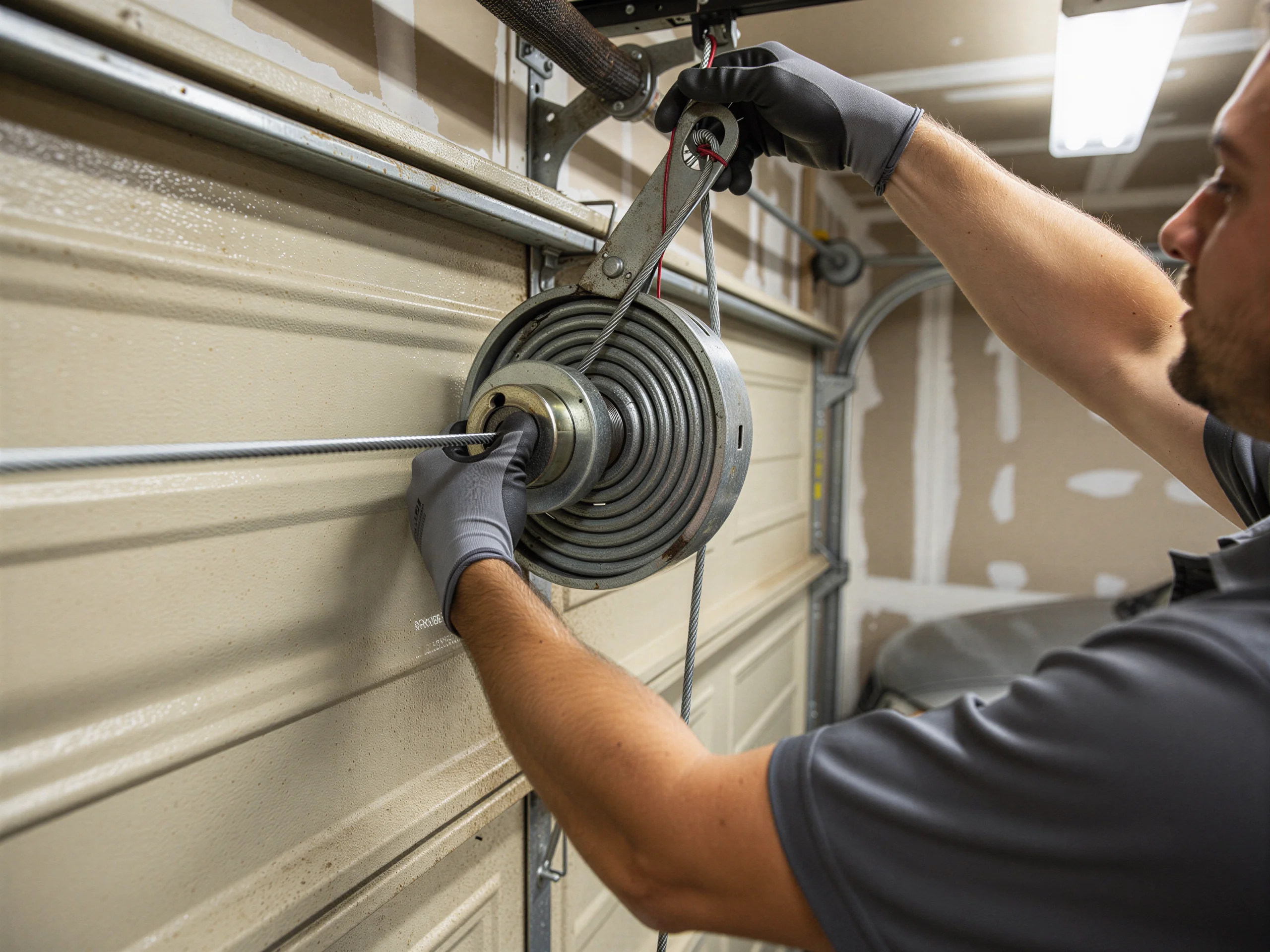
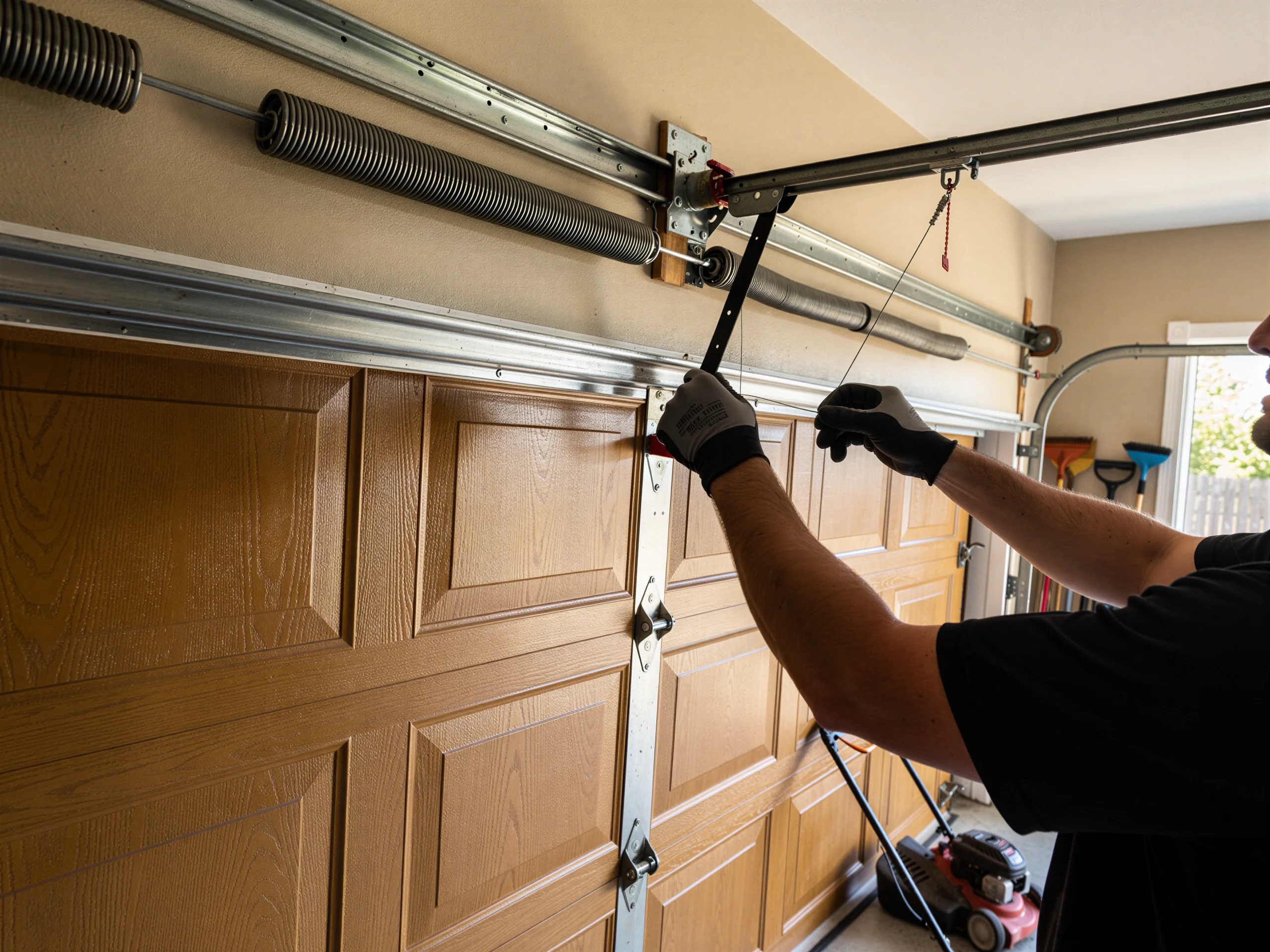
The bigger limitation: if the torsion spring is original to the door, which is common on houses this age, a new panel on a tired spring just moves the sag somewhere else. We'll tell you straight if that's what's going on before you spend money on a panel alone.
Symptoms
On a door from 1983, panel trouble usually shows up as a dent from a car bumper or a basketball, or a bottom panel that's gone soft at the bottom edge where water used to sit.
The mild temperate climate out here is kinder to steel than a humid coastal strip would be, so what we see is less rust-through and more chalking paint, faded color, and dents that have worked a hinge loose over time.
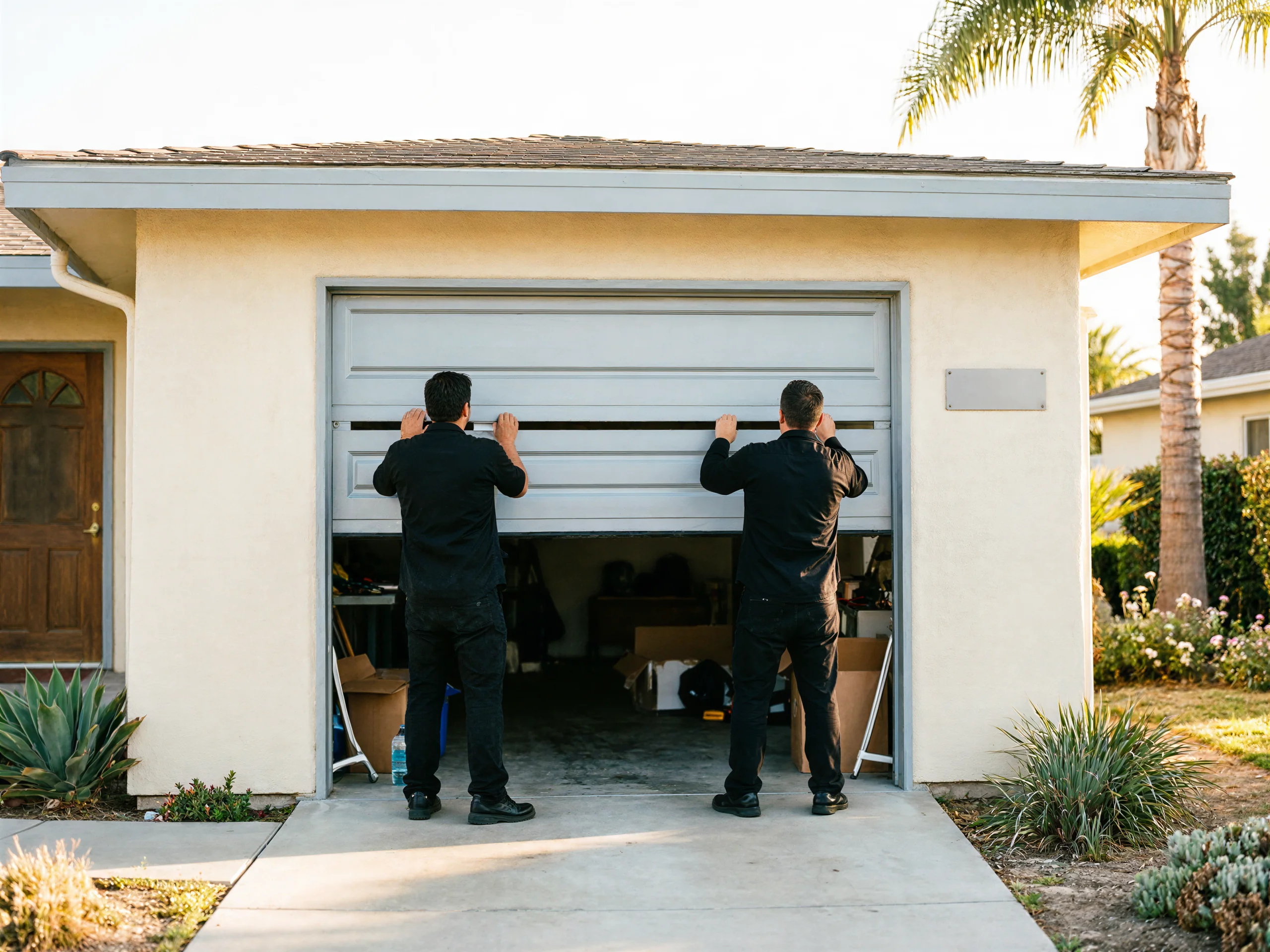
Sometimes it's a single bottom panel that's taken the brunt of weather and lawn equipment for decades. Sometimes it's a middle panel that got backed into once and never quite sat flush again, throwing off the roller alignment in that track section.
Either way, the panel itself is rarely the only thing to check - a dented panel on an original 1983 door often means the rest of the hardware is the same age and worth a look while we're there.
Booking
Valley Center sits about 17 miles from our shop in Oceanside, which puts it toward the far edge of what we cover. For a panel-only job, that distance usually means two visits rather than one: a first trip to measure the exact panel size, hinge spacing, and color, and a second to install once the matching section is in. We'd rather do that than guess at a color over the phone and show up with the wrong piece. If the damage is on a common panel size, we sometimes carry a close match on the truck and can save you the second trip. We don't keep a branch out this way, so scheduling the measure visit and the install visit close together is worth asking for when you call.
The repair
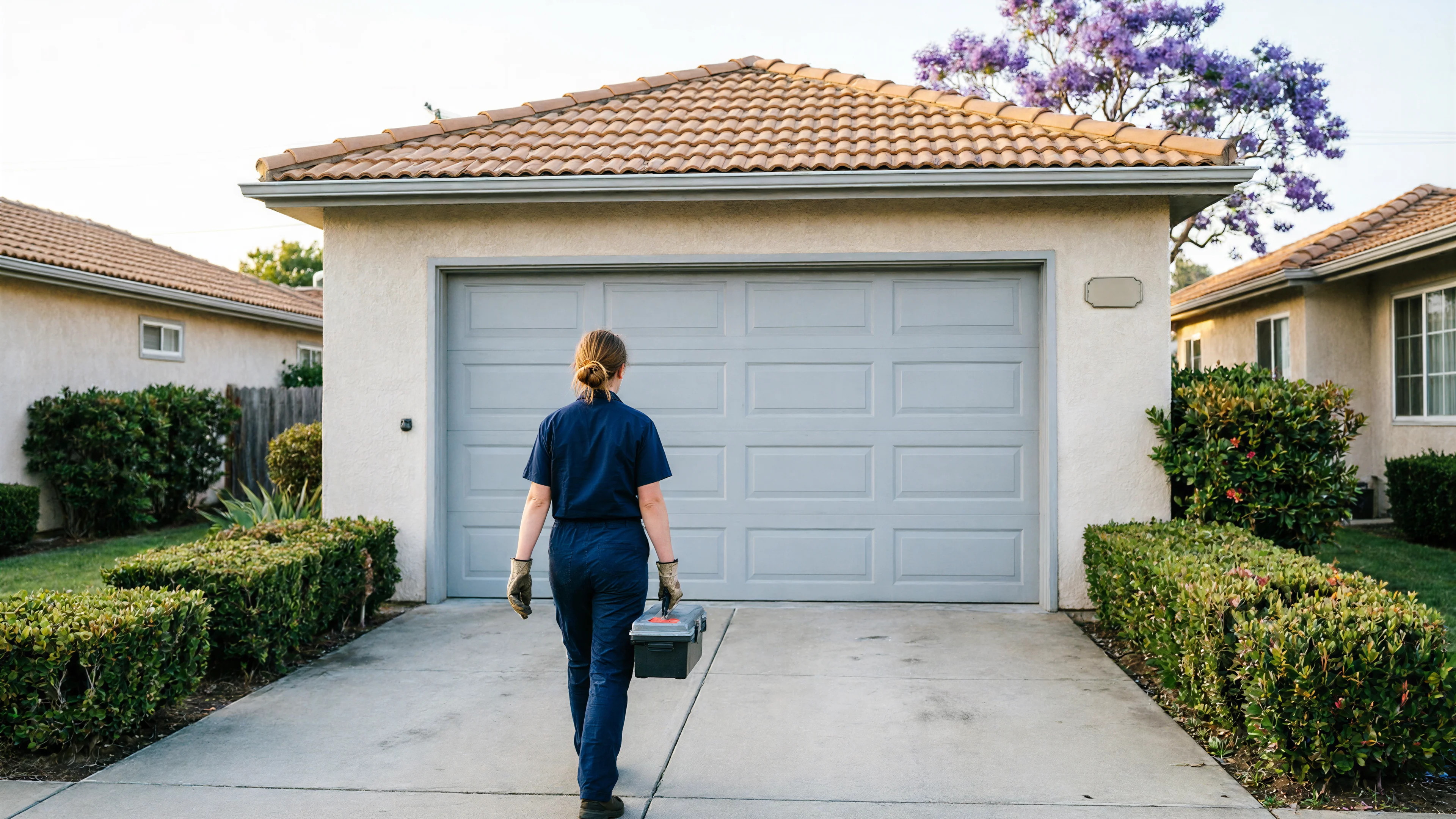
First we identify the exact panel - width, number of sections, hinge style, and whether it's a raised-panel or flush design, since 1983-era doors came in both.
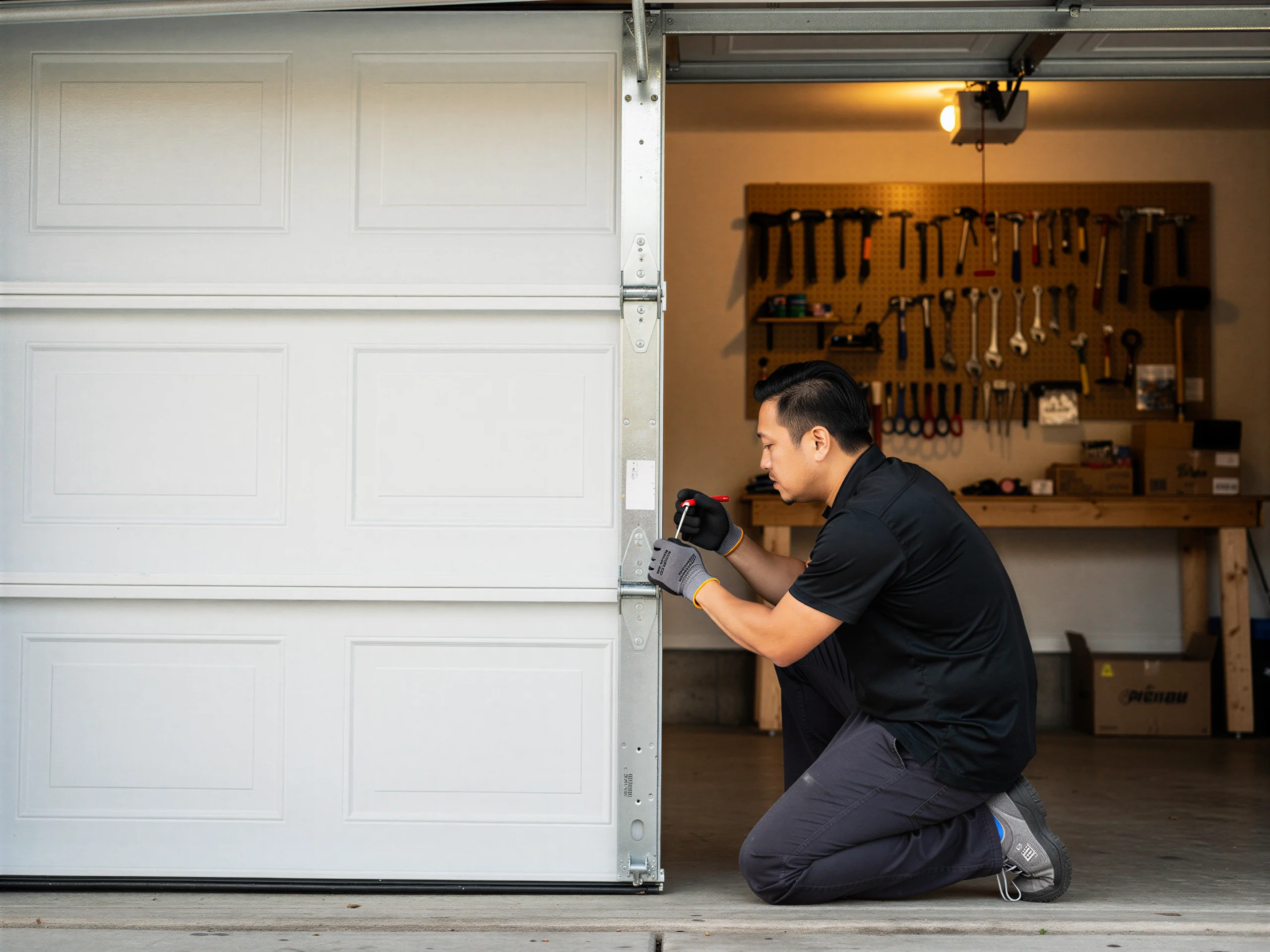
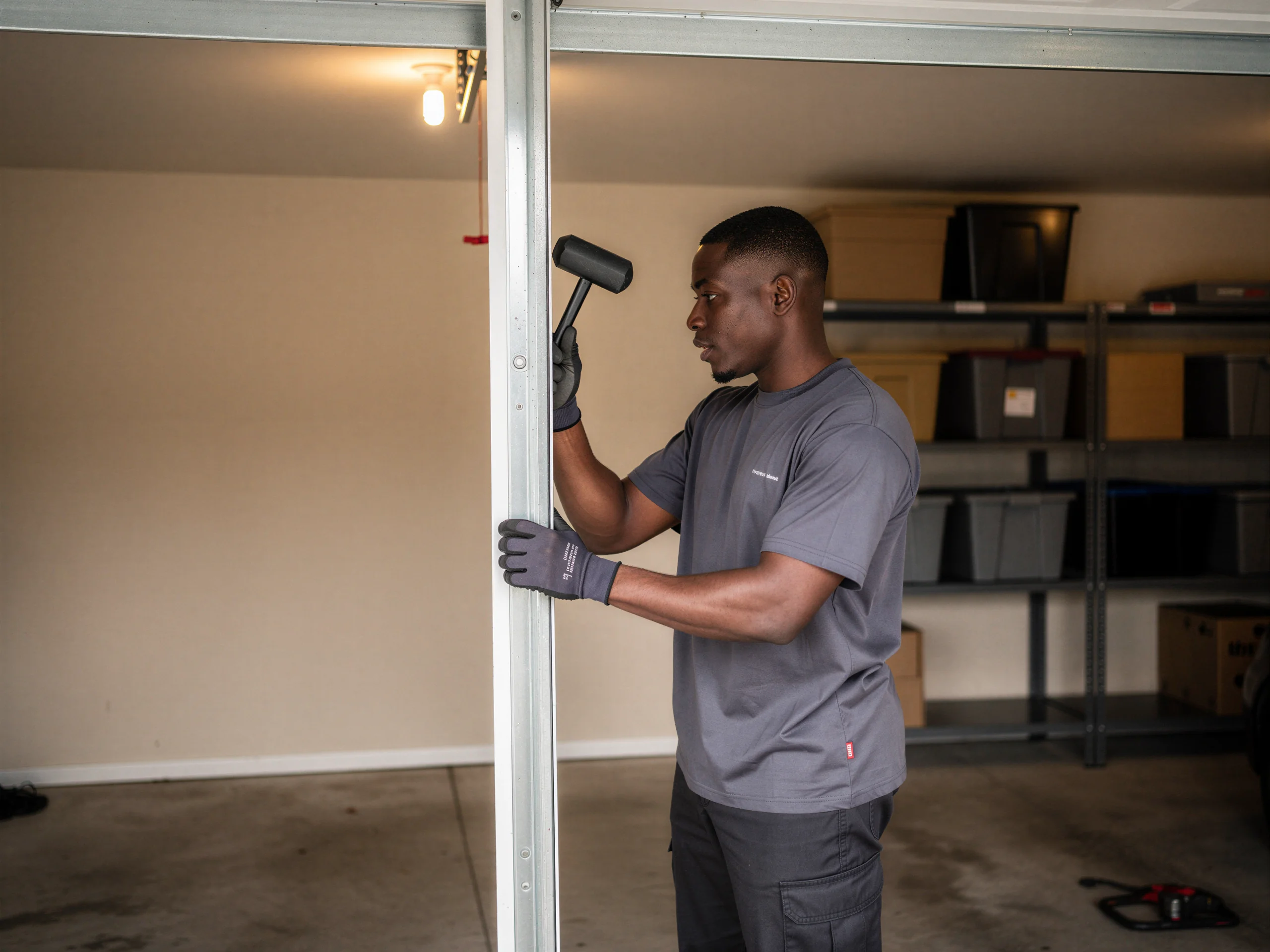
We order the closest match we can find, because the original factory run for a door that age is long out of production. Installation means unbolting the hinges above and below the damaged section, sliding the new panel into the tracks, reattaching hinges, and checking that the door still rolls square in both tracks top to bottom.
On a double-wide door we also check the center stile for play, since a hard impact on one panel can rack the whole section out of true. Once it's in, we rebalance the door against the spring and run it a dozen cycles to watch for drag or noise before calling it done.
On the truck
We stock standard steel raised-panel sections in the common widths that fit most doors built through the 80s and 90s across this area, which covers a good share of what we see on these calls. What we can't always match is the exact factory color from 1983 - many of those paint runs are long discontinued, and a mismatched panel on an otherwise clean door looks worse than people expect. With about 3,016 households in Valley Center, there just wasn't enough volume in any one uncommon color to keep stock of it decades later. When an exact match isn't possible, we'll say so up front and give you the option of a close color, a full repaint of the door, or holding off until replacement makes more sense.
Watch-outs
The complication we run into most on doors this age isn't the panel - it's everything attached to it. A torsion spring installed in 1983 has had forty-some years of cycles on it, and replacing a panel without checking that spring is asking for a second call. Cables, rollers, and hinges from the same install often show matching wear. Median household income in Valley Center runs around $116,620, a bit above the roughly $110,316 median across the wider service area, and that's often the number that tips a homeowner from patching one panel toward replacing the whole door with something that matches top to bottom instead of mixing old and new sections. We won't push that decision either way - a single panel swap is a legitimate fix when the rest of the door is sound. It's only when the hardware is clearly at the end of its life that patching one panel stops making sense.
Questions
Sometimes, but not always. Paint runs from the early 1980s are mostly discontinued, and a town the size of Valley Center never had enough volume in less common colors to keep stock around. We'll check what's available before you commit and tell you honestly if a close match or a repaint is the realistic option.
Common sizes sometimes ride on the truck, but most panel jobs here need a measure visit first, since we're about 17 miles out and don't want to guess at size or color. Once we confirm the match, the second trip is the install.
Only if the sag is actually coming from the panel. On a door built around 1983, it's just as likely to be an original torsion spring or worn rollers doing that. We check the whole door before recommending a panel-only fix so you're not paying for a repair that doesn't solve the real problem.
Depends on the rest of the door's condition. If the spring, track, and other panels are sound, one panel is the cheaper, sensible fix. If the hardware is original and showing its age, a lot of homeowners here decide to replace the whole door rather than patch around aging parts.
Explore more
Ready when you are
Oceanside Garage Door Pros repairs and installs garage doors, springs and openers in Oceanside, CA and the surrounding area.