
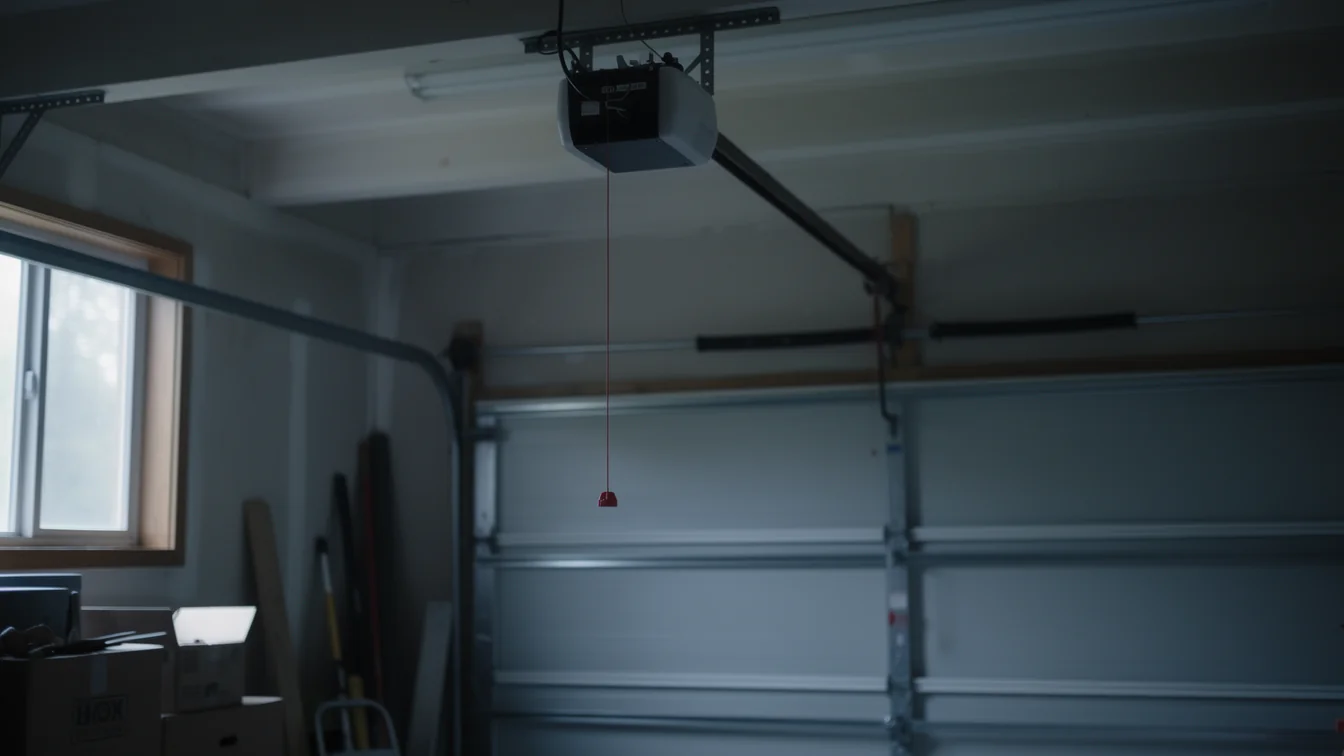
Openers and Power Cuts in Oceanside Homes
Why Oceanside's 1970s-2003 housing stock and mild coastal climate shape opener failures and power-cut backup needs, and what actually drives the repair cost here.
Read moreOceanside homes mostly date 1970-2003. Here's how to tell if your original garage door and opener are still worth repairing or if it's time to replace.
Local detail
We can't quote you a number until we're looking at the door, but we can tell you what moves the needle. A broken torsion spring on a door that's otherwise sound is almost always worth fixing - springs are a wear item, not a verdict on the whole unit. Where it gets expensive is when the drum, track, or bottom bracket has been damaged alongside the spring, or when the opener is original equipment and the circuit board has finally given out.
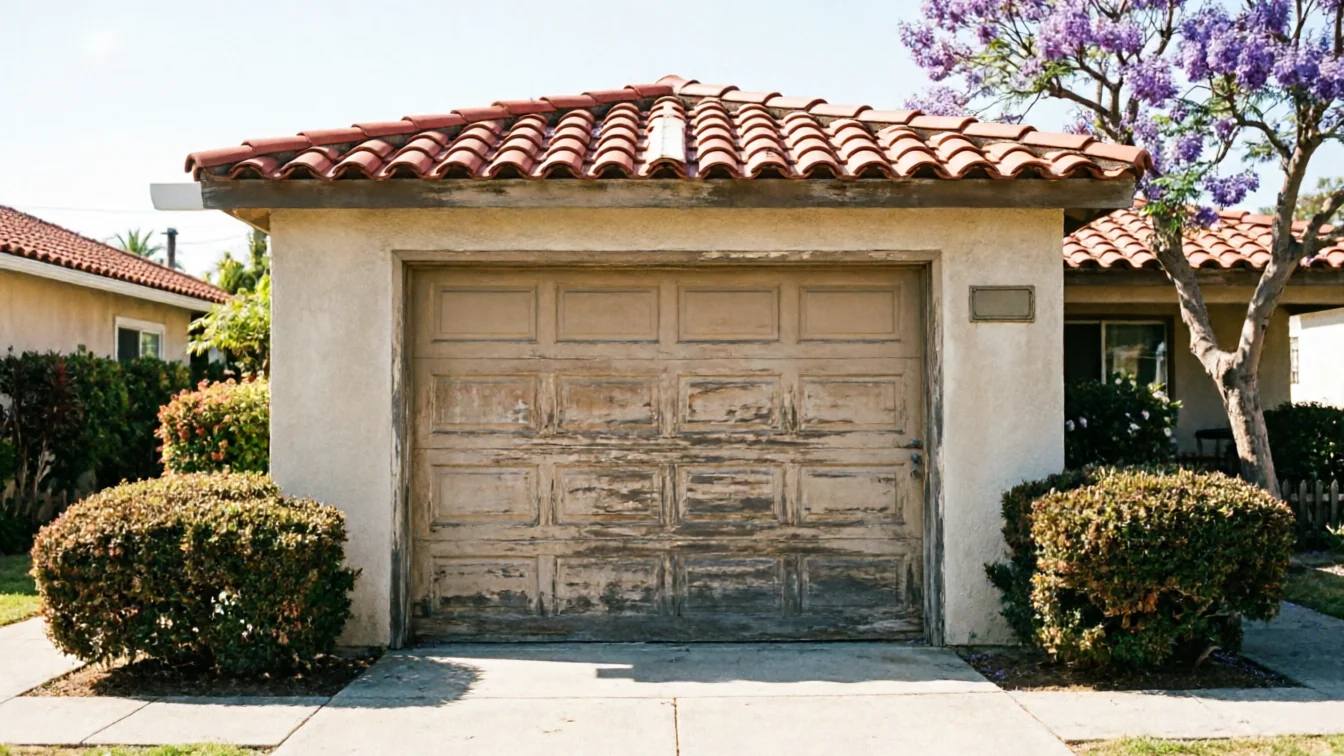
Most houses across this service area went up between 1970 and 2003, with the median landing around 1982, so a lot of what we're called out to is original hardware that's simply reached the end of its cycle count. On a door that age, we'll tell you straight if a repair is a stopgap or a real fix. One honest limit: if the door itself is warped, delaminated, or the track has been bent and re-bent, spending money on a spring or opener swap just delays the inevitable, and we'll say so instead of selling you a patch.
We don't do cosmetic refinishing or custom wood doors - if that's what you're after, we're not the right call for that part of the job.
The area
This area sits in a mild temperate band, which matters more than people think when you're deciding whether a spring failure is an age problem or a weather problem. In places with hard winters, torsion springs often snap during a cold snap because metal contracts and the steel gets brittle right when cycle stress is highest. We don't see that pattern here. When a spring goes on an Oceanside door, it's almost always from cycle count catching up with it, not a sudden temperature swing.
That changes how we think about timing. We're not telling owners to get ahead of a seasonal freeze-thaw cliff the way a shop in a colder climate would. Instead, the clock that matters is the one on the spring itself - most are rated for a set number of open-close cycles, and a door that's original to a house built in the early 80s has likely used up most of that rating regardless of the month. If your spring is original and your house is from that era, don't wait for a sign of trouble. The failure mode here is gradual fatigue, and it tends to let go without much warning.
What we find
With 13 named areas in this stretch of North San Diego County mostly built out in the 1980s and 90s, a huge share of the housing stock shares the same bones: steel sectional doors, galvanized torsion springs, and chain-drive openers that were standard equipment at the time. If you're in Ivey Ranch, San Luis Rey, Fire Mountain, or South Oceanside, there's a good chance your garage door and opener are original or close to it, and they were built to a spec that's now 30-plus years old.
That matters for parts. Some hardware from that era - specific drum sizes, older opener logic boards, certain panel profiles - isn't something we can pull off a shelf. We may need to special-order a part to match an original setup, which adds lead time to a repair that would otherwise be quick. It's one more reason the fix-or-replace call depends on more than just what broke: it depends on whether the rest of the door is worth keeping parts flowing to.
With 25,689 owner-occupied houses across this service area, a lot of those original 1980s doors are still running the same torsion springs they came with, which tells you plainty of neighbors are facing this same call right now.
How we work
Put the pieces together and the picture is pretty clear. Housing here runs 1970 to 2003 with a median build year around 1982, which means a large share of doors on the road are 25 to 50 years old. The mild climate hasn't been hard on the steel itself, but it hasn't stopped the mechanical parts from aging on schedule either - springs still wear out by cycle count, openers still fail as their electronics age, and rollers still wear down from use regardless of what the weather's doing outside.
At a median household income of $110,316, most owners here can afford a full replacement without stretching the budget, which is worth knowing because it means the decision usually isn't forced by money - it's a real choice between repairing a door that's earned its keep and replacing one that's become a parts problem. Our rule of thumb: if the door itself is straight, the track is true, and it's just the spring or opener giving out, fix it. If you're chasing the third repair in two years on a door that's original to a house built in the early 80s, that's the door telling you something.
Questions
Depends on what failed. A dead capacitor or a worn drive gear on an older chain-drive opener is usually a straightforward swap. If the circuit board has failed on a unit from the 1980s or 90s, we may not be able to source an exact replacement board, and a full opener swap often makes more sense than chasing discontinued parts.
Torsion springs are rated for a set number of open-close cycles, and once a spring hits that number, it can let go without warning. In this climate we don't see the cold-snap failures that colder regions get, so a sudden break here is almost always the cycle count catching up with an older spring.
Sometimes, if the door is a standard profile and the rest of the panels are in good shape. But doors from the 1980s and 90s often used profiles that have since changed, so matching a single panel isn't always possible. We'll check before quoting a panel-only fix.
If your house was built in the 1980s or 90s and the door has never been replaced, check the manufacturer label inside the door track or on the end stile. If there's no sticker or it's unreadable, that itself is often a sign of real age.
Recommendation
More garage door guides for Oceanside homeowners.
Why Oceanside's 1970s-2003 housing stock and mild coastal climate shape opener failures and power-cut backup needs, and what actually drives the repair cost here.
Read more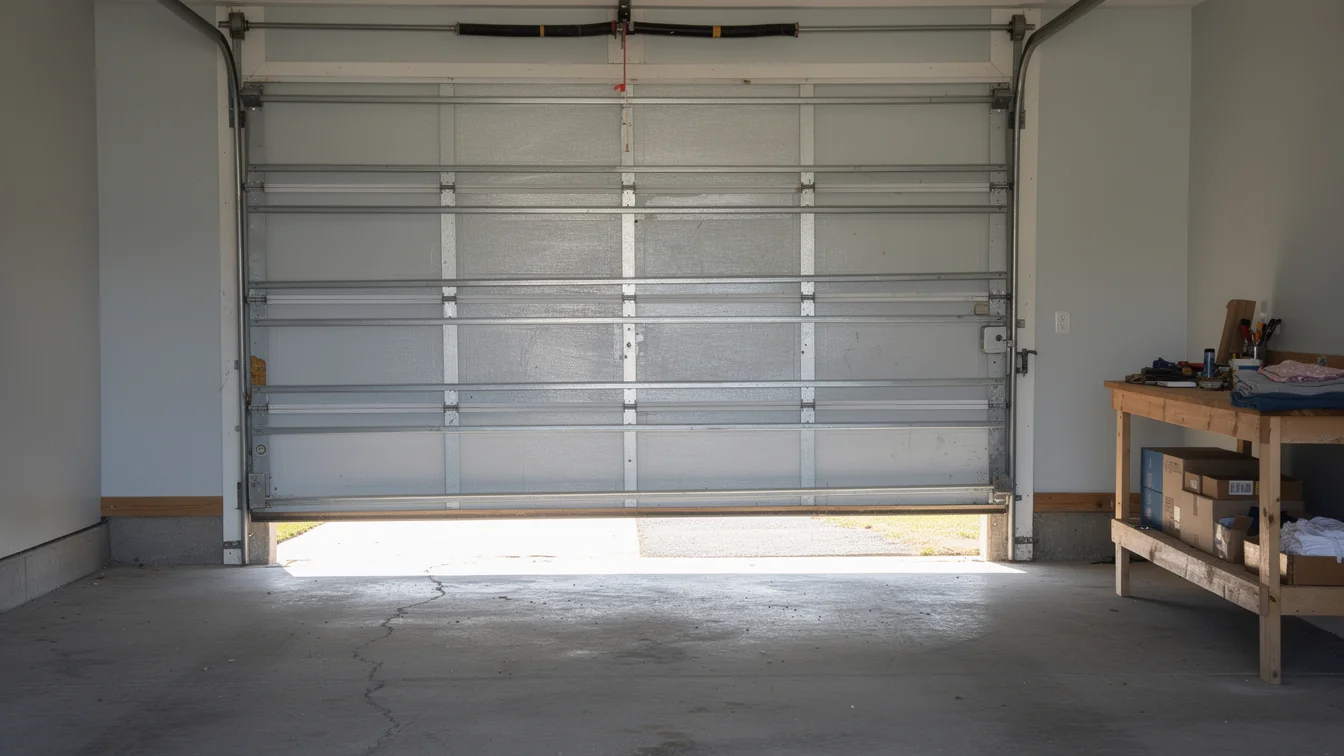
Most Oceanside garage doors date to the 1970-2003 building boom, before modern insulation code.
Read more
A grinding, popping, or squealing garage door in Oceanside usually traces back to the age of the hardware.
Read moreReady when you are
Oceanside Garage Door Pros repairs and installs garage doors, springs and openers in Oceanside, CA and the surrounding area.