
Newer-build failure pattern
Most of what we see here dates to the early-to-mid 1990s, median year built sits around 1994, which puts it noticeably newer than a lot of the older pockets closer to the coast. That matters for what breaks.
 Oceanside, CA
San Marcos, Oceanside
San Marcos runs about 30,880 households on mostly 1990s-built homes, ten miles from our Oceanside shop. We know the openers and spring sizes that era uses.
Symptoms
San Marcos is a bigger town than a lot of the stops on our route - something like 30,880 households, which means we're not dealing with one or two garage door styles, we're dealing with whatever got built across a couple decades of growth.
Most of what we see here dates to the early-to-mid 1990s, median year built sits around 1994, which puts it noticeably newer than a lot of the older pockets closer to the coast. That matters for what breaks.
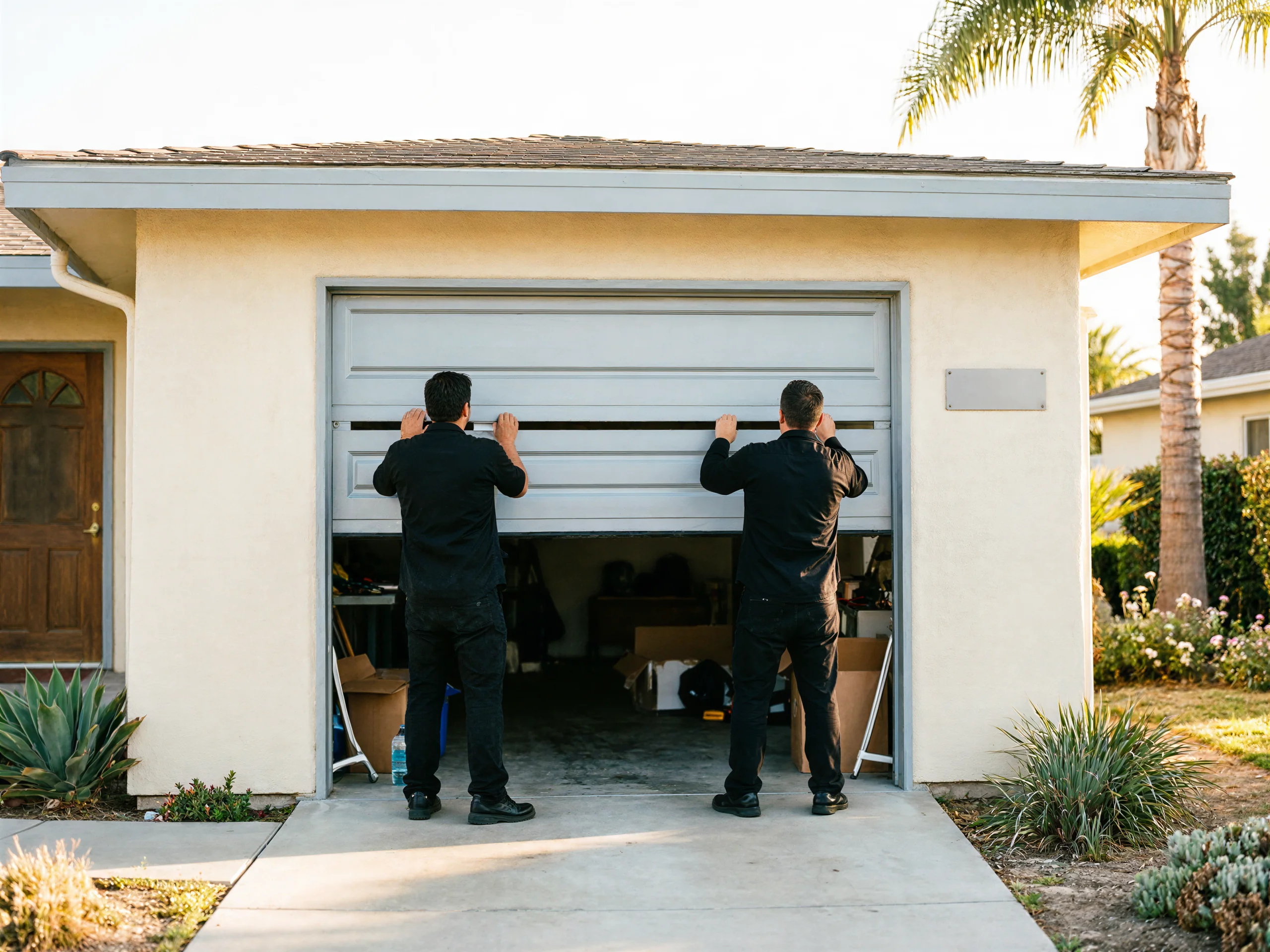
A house from 1994 isn't fighting the same hardware as a 1960s original door - you're mostly looking at steel sectional doors on extension or torsion springs, openers that are chain-drive or early screw-drive units nearing or past their expected lifespan. The common call out here is a spring that's finally given out after 25-30 years of cycles, or an opener logic board that's started acting erratic - not rot, not warped wood panels.
We're ten miles out from our Oceanside base to get here, so when you call, tell us what the door is doing - won't open, opens partway, makes a grinding noise on the way up - it helps us bring the right stock on the truck instead of guessing.
On the truck
For a town built mostly in the 1980s and 90s, the common parts are the ones we keep stocked without a special order: torsion springs in the sizes that fit standard 7-foot and 8-foot sectional doors, extension spring sets, nylon and steel rollers, and openers in the mid-horsepower range that replace the chain-drive units original to that construction period.
Cable and drum sets are common too - on a door that's run for 25+ years, a frayed cable is often the first sign something's about to let go entirely.
What we don't always have on the truck is anything custom - a non-standard panel size, a discontinued opener model from a builder-grade install, or hardware for a door that's been modified over the years.
If that's what we find when we get there, it may mean a short wait on a special order rather than a same-visit fix. We'd rather tell you that up front than have you wait on a truck that doesn't have what your door needs.
The repair
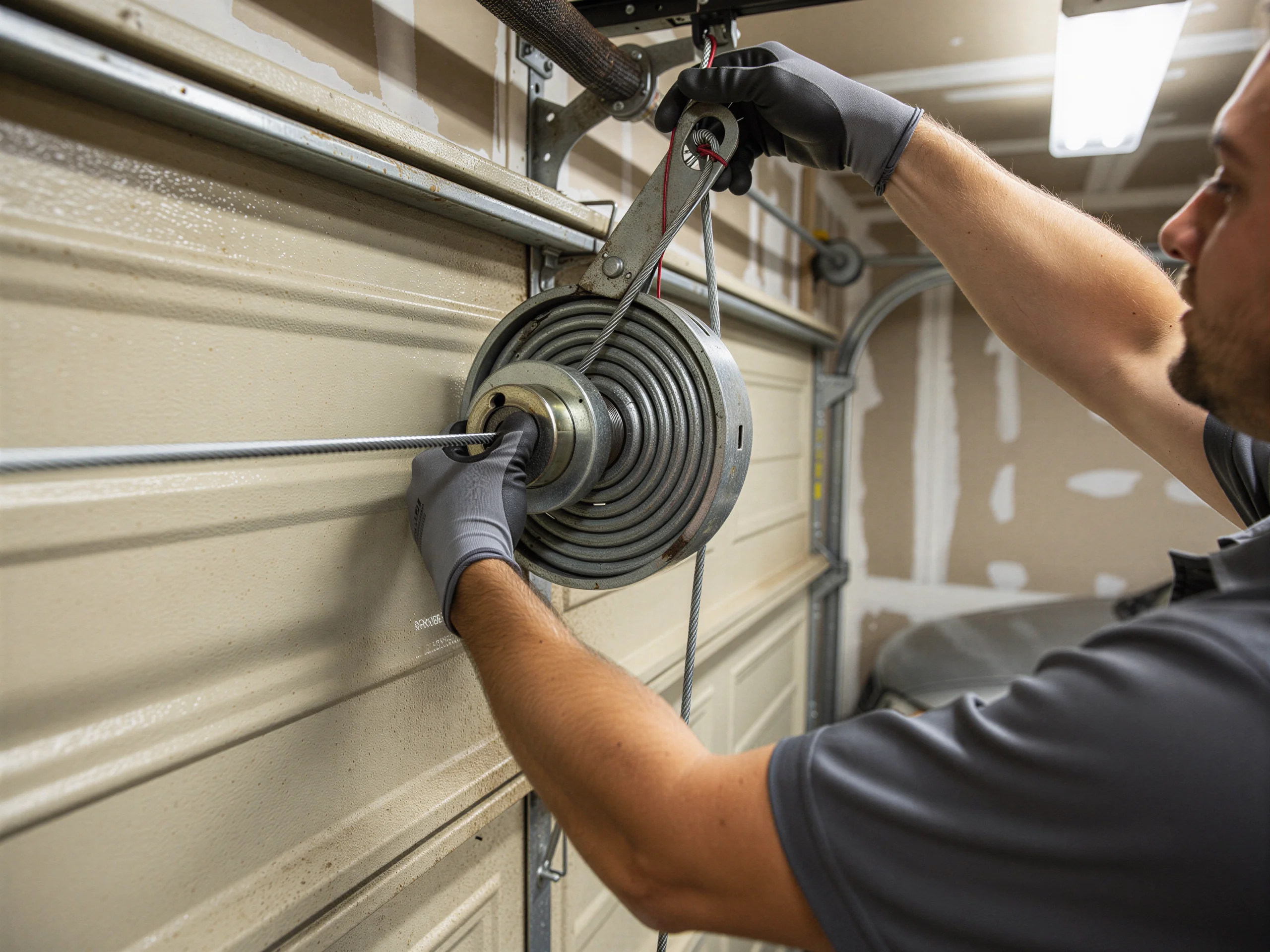
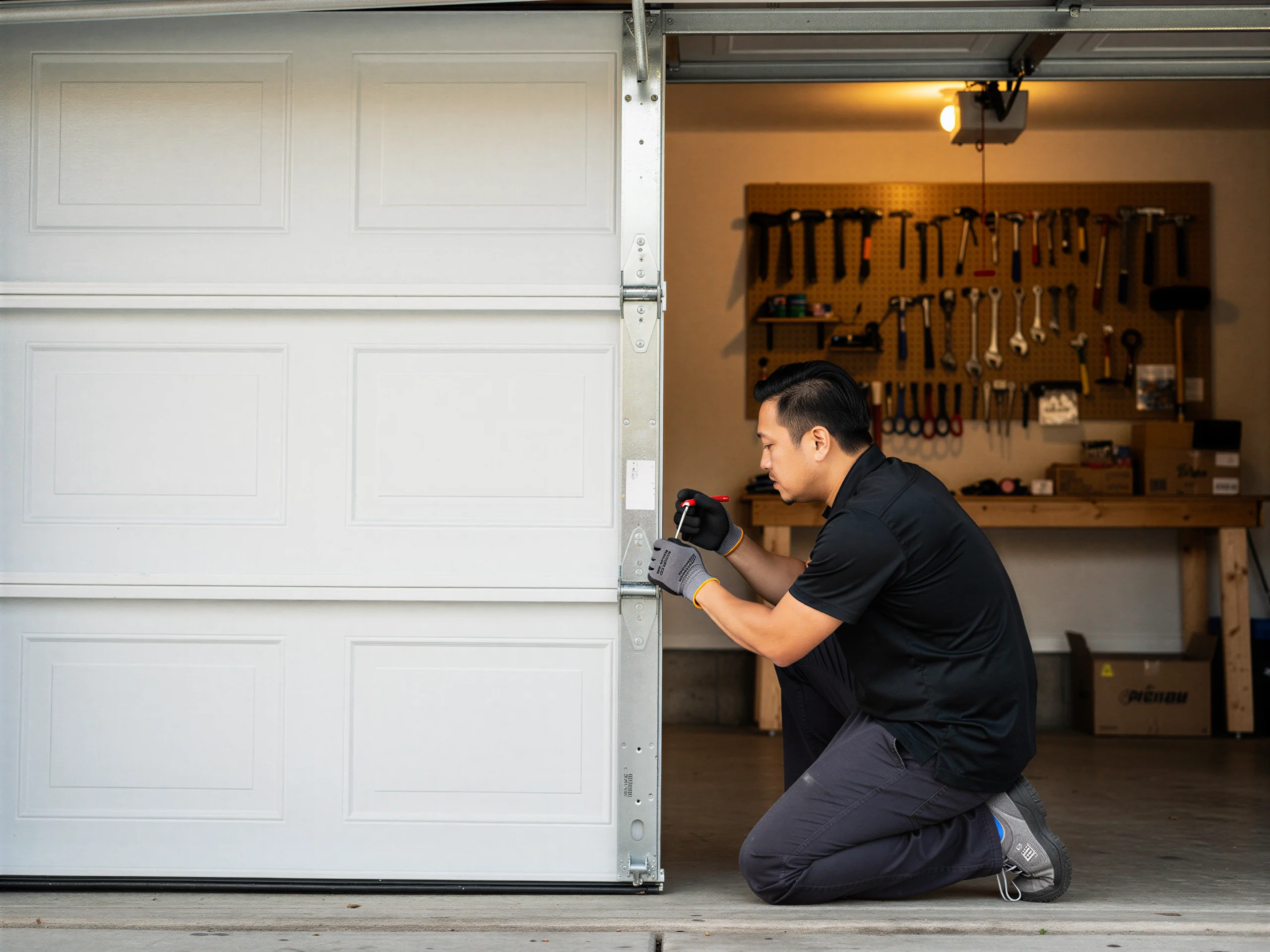
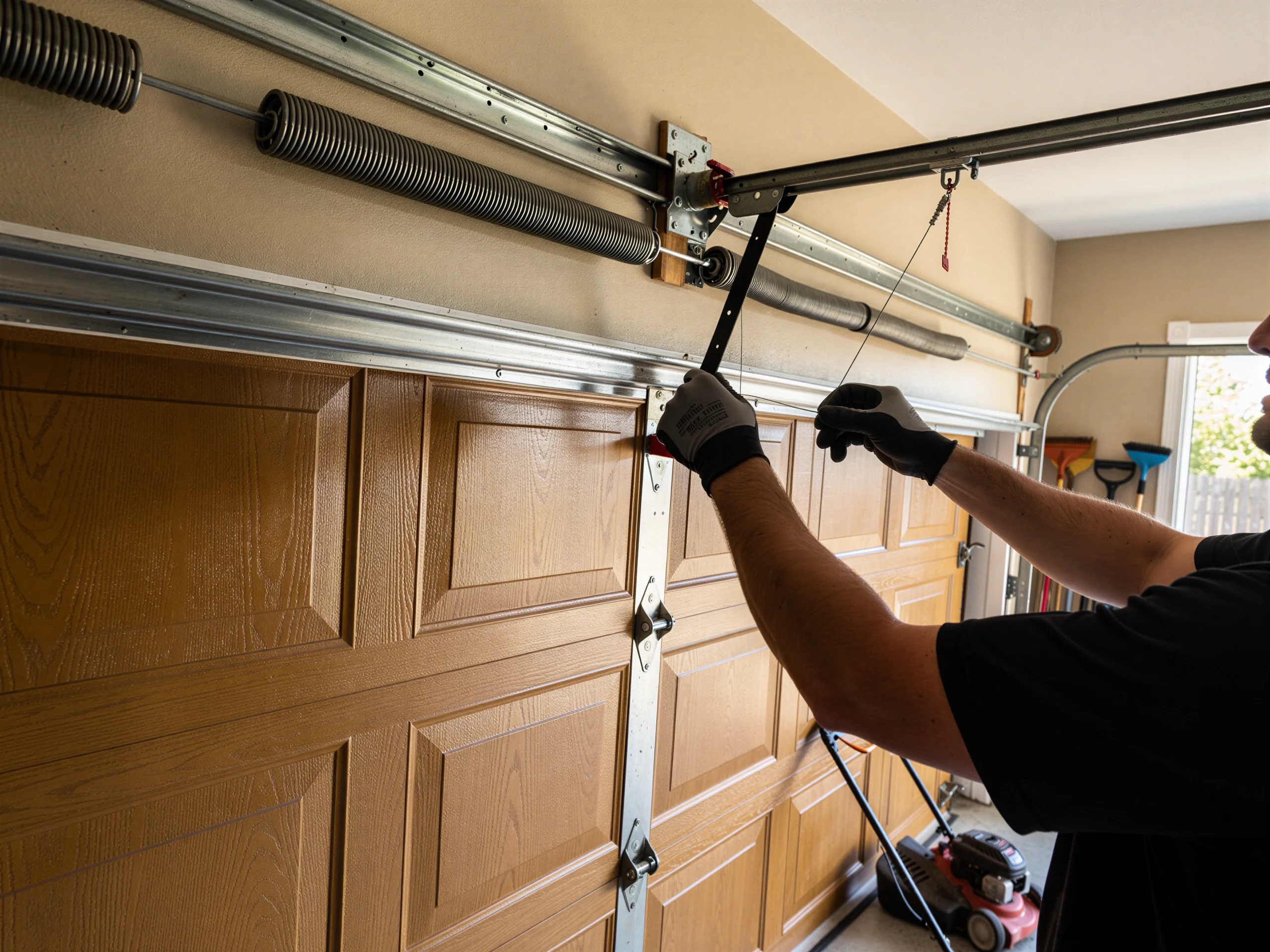
On a torsion spring replacement, which is the most common job on housing stock from this era, we pull the old spring, measure the door weight and wire size, and set a matched replacement under tension with a winding bar - this is not a job to do with the door's own weight working against you.
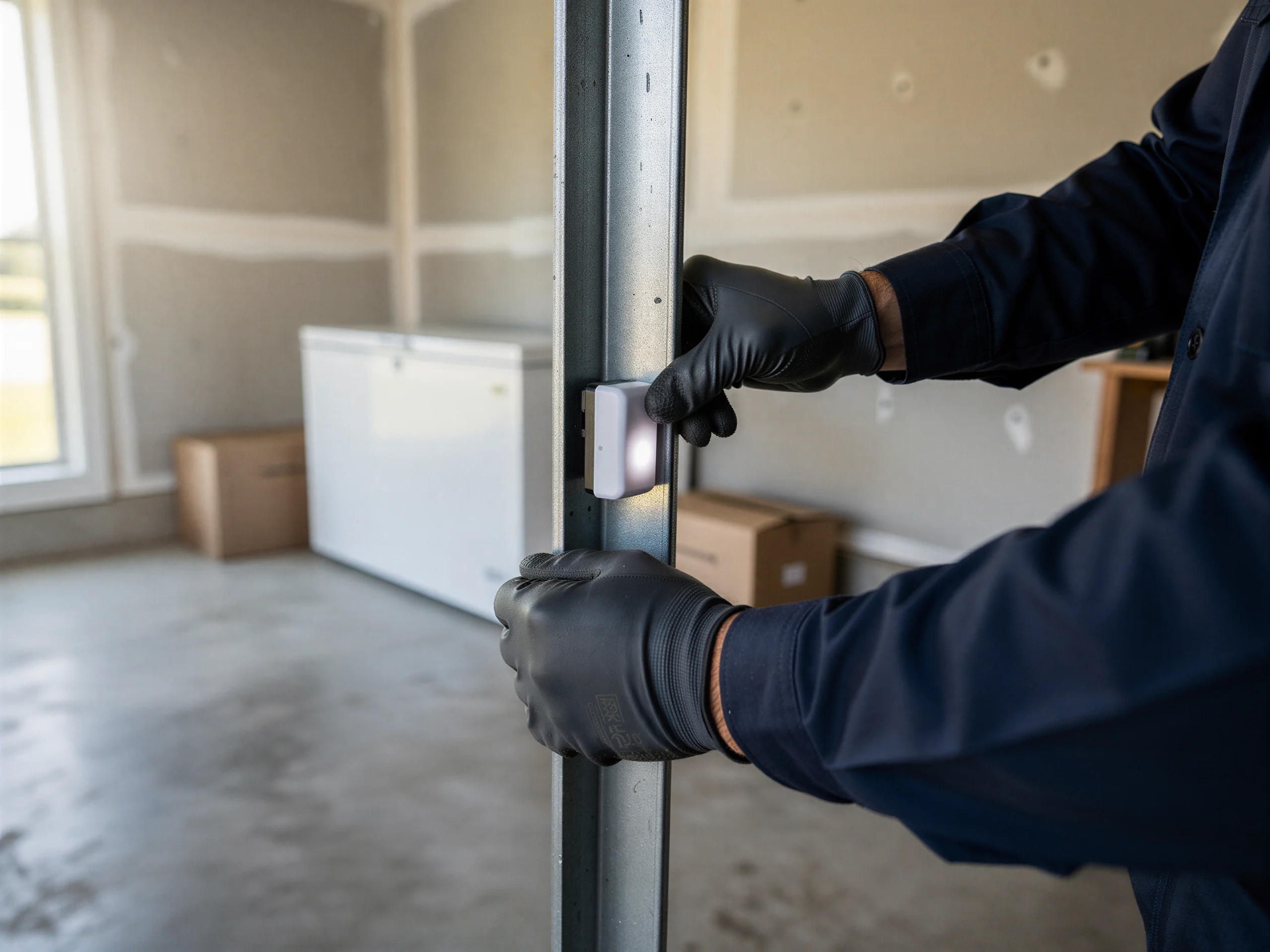
On an opener swap, we're pulling the old chain-drive or early screw-drive unit, mounting the new rail and motor, and reprogramming remotes and any keypad. If rollers or cables are also worn - which they often are on a door this age - we'll flag it while we're in there rather than make you call again in six months for the next failure.
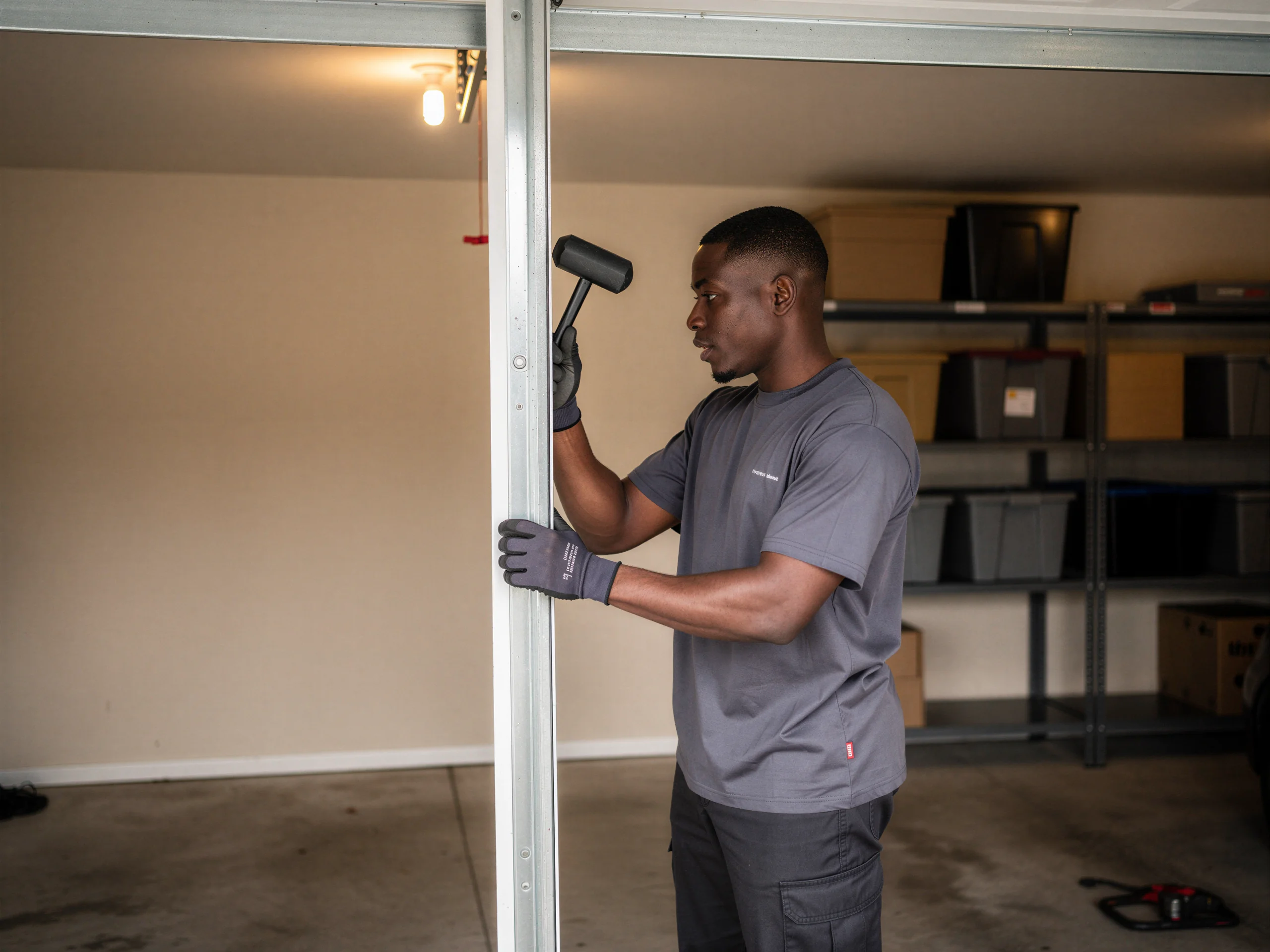
Track alignment gets checked too; a door that's been running slightly out of true for years usually shows up as noise or a panel that's started to bind. None of this is quick work done safely, and we don't rush tension jobs.
Pricing
We don't have a fixed number to quote you here without seeing the door - spring size, opener model, and what else has worn down all change the job. What we can tell you is that San Marcos households run a median income around $105,286, somewhat below the income figure across the wider service area, and most of the jobs we price here are straightforward spring or opener replacements rather than full door rebuilds - again, a function of housing that's mostly 1990s rather than older. We'll give you the number before we start, not after.
DIY or pro
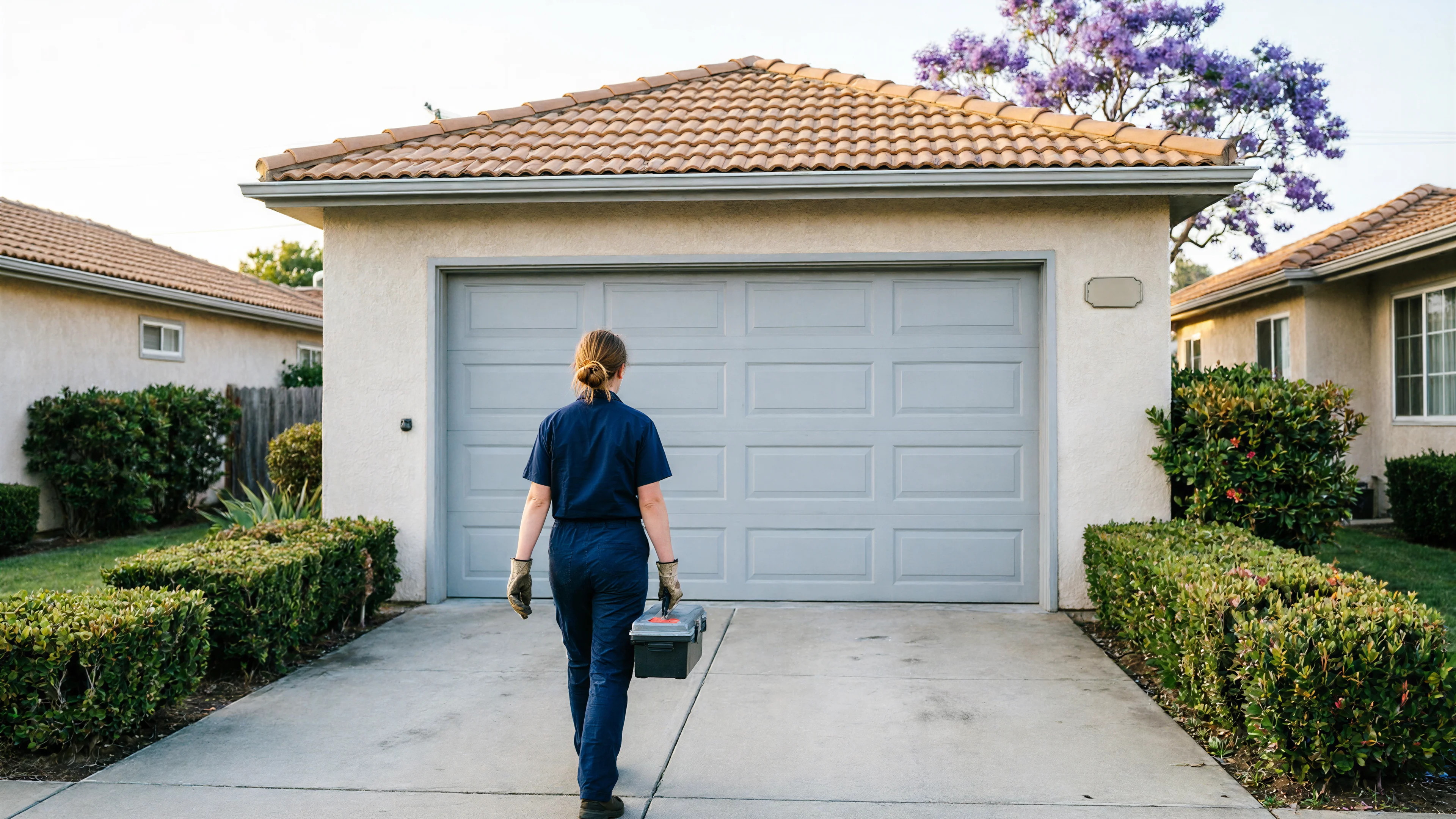
A torsion spring is under enough stored tension to break a bone or worse if it lets go while you're working on it - that's not us being cautious for the sake of it, that's just the physics of the part. Swapping an opener is more forgiving and plenty of homeowners do it themselves if they're comfortable with basic wiring and ladder work. Where we'd tell you to stop and call someone: anything involving the spring, the cables, or the drums. If your garage door in San Marcos is from the original 1994-era build and has never had the spring replaced, it's likely overdue, and that's exactly the job we don't recommend doing solo.
Questions
About ten miles. We cover San Marcos as part of our regular service area, so a call here isn't out of the ordinary for us - it just means factoring that drive into when we can get out to you.
Most homes here were built in a tight window, median around 1994, so a lot of original springs are hitting the end of their rated cycle count around the same time. It's not a defect, it's just the hardware aging out together.
We stock what fits the common sectional doors and openers from the 1980s-90s building boom. A custom or discontinued part may need a special order rather than a same-day fix - we'll tell you on site if that's the case.
Depends on the age and model. If it's an original chain-drive unit from the early 90s nearing 30 years old, repair parts can be harder to source, and a new opener often costs about the same as a serious repair while adding a longer service life ahead of it.
Explore more
Ready when you are
Oceanside Garage Door Pros repairs and installs garage doors, springs and openers in Oceanside, CA and the surrounding area.